
OUR EFFORTS TO BUILD AN INCLUSIVE AND LITERATE FUTURE
HOW WE’RE MAKING A DIFFERENCE

Literacy Programs

Special Education Support

Community Workshops
2026 FUNDRAISER — CHAMPIONS FOR JUSTICE
Our 2026 mission is to expand the reach and impact of the Liberia Inclusion and Literacy Foundation (LILF).
Together, we are raising $50,000 USD to:
- Build accessible classrooms in underserved communities
- Fund vocational training for Deaf and marginalized youth
- Provide scholarships and educational materials
- Host community health and wellness sessions
BE PART OF THIS LEGACY. TOGETHER, WE ARE PLANTING SEEDS OF CHANGE.
ABOUT THE MISSION
2026 FUNDRAISER – CHAMPIONS FOR JUSTICE
- Build accessible classrooms
- Fund vocational training programs
- Provide scholarships and educational materials
- Host wellness and health-based outreach for families
Be part of this legacy. Together, we are planting seeds of change.
GLOBAL LEARNING CENTER (GLC)
A Vision of Education, Empowerment, and Sustainable Development.
An Initiative of the Liberian Inclusion and Literacy Foundation (LILF)
Founder & CEO: Charles D. Lamadine

Overview
The Global Learning Center (GLC) is the educational and empowerment arm of the Liberian Inclusion and Literacy Foundation (LILF) — a dynamic platform created to build bridges between literacy, livelihood, and life skills.
The four Wings of the Global Learning Center
At the heart of the Global Learning Center are four living wings—each uniquely vital, yet deeply interconnected. Together, they form a network of education, culture, and empowerment that resonates across borders and communities.
The four Wings of the Global Learning Center
Introduction to the Four Pillars of the Global Learning Center
The Four Pillars
1
2
3
4
The Teacher’s Aid – strengthening education by empowering those who teach.
A network that supports teachers across Liberia through training, digital literacy, and professional exchange programs. The Teacher’s Aid connects educators globally to share tools, methods, and ideas — ensuring that no teacher stands alone.
The Teacher’s Aid exists to connect educators from advanced countries with those serving in developing contexts like Liberia. It is a bridge of mentorship, exchange, and shared growth, where wisdom and resources flow freely across cultures. Through this network, teachers empower one another, ensuring that every child has access to quality education, no matter where they are born.
Here, teachers find:
Resource sharing to supply books, teaching aids, clothing, and shoes for students.
Mentorship that equips teachers in challenging environments with encouragement and practical guidance.
Cultural exchange that fosters respect and unity through shared traditions and perspectives.
Collaborative learning that links classrooms globally in a spirit of solidarity.
Focus Areas:
- Teacher training and certification support
- Classroom resource development
- Distance learning and digital education
- Cross-border mentorship programs


The Tradesperson’s Portfolio – cultivating skilled hands on and self-reliant of communities
The Tradesperson’s Portfolio celebrates the skill and craftsmanship that build societies and sustain economies. It is a hub where vocational literacy and practical trades are uplifted, valued, and passed on. From carpentry to tailoring, mechanics to farming, tradesmen and women find a platform to learn, share, and thrive.
The Tradesperson’s Portfolio is dedicated to vocational literacy, skill-building, and the dignity of labor. It recognizes that progress is not only fueled by classrooms and theories but also by the hands that build, repair, design, and innovate. From carpentry to mechanics, tailoring to farming, trades are honored here as essential pillars of society.
Here, the dignity of labor is restored, and every trade is recognized as an essential building block of human progress.
Through the Tradesperson’s Portfolio:
Practical Skills Development – Learners are grouped according to their level and field, ensuring clear paths for growth in specific trades.
Interactive Chartrooms – Digital and physical spaces where learners and practitioners can ask questions, share solutions, and collaborate on projects.
Panel Discussions & Workshops – Platforms where trade professionals share insights, innovations, and challenges, fostering continuous improvement.
Global Exchange of Techniques – Workers from different regions will learn new methods and technologies, enriching both local and international practice.
Economic Empowerment – By advancing trade literacy, individuals are equipped not only to earn a living but also to strengthen their families and communities.
The Tradesperson’s Portfolio is more than training—it is a movement to uplift the dignity of work, to honor craftsmanship, and to ensure that every skill contributes to the progress of humanity.
A practical platform that equips youth and adults with employable skills in trades such as carpentry, masonry, electrical work, tailoring, mechanics, and construction.
Focus Areas:
- Vocational training and certification.
- Equipment and tool distribution.
- Employment linkages and entrepreneurship support.
- Development of local trade hubs for community use.
The Artist’s World – Where Creativity Meets Opportunity
The Artist’s World – celebrating creativity as a path to identity and opportunity.
A cultural and artistic space celebrating Liberian creativity — from visual arts to music, dance, drama, and crafts. This pillar connects artists with training, exhibitions, and income-generating opportunities while preserving the nation’s cultural heritage.
This platform presents: Creativity Without Borders
The Artist’s World is a vibrant meeting ground for creativity, imagination, and cultural exchange. It is a community where artists from every discipline—visual arts, music, dance, theatre, writing, and more—can gather to share values, experiences, and perspectives. Beyond individual expression, this platform nurtures community, dialogue, and cross-cultural understanding. It is a global stage where culture, values, and human expression are honored as vital forces for unity and healing.
Through this wing, artists engage in:
Cultural Exchange – Artists become ambassadors of their heritage, sharing traditions and stories that connect communities across borders.
Collaboration across disciplines, sparking new forms of art and innovation. In this space, Painters, musicians, dancers, writers, and performers will work together, blending disciplines to create new forms of expression.
Community Voice- giving expression to the joys and struggles of everyday life. In this space, Art becomes a voice for the unheard, allowing societies to reflect, heal, and celebrate together.
Global Showcases – concerts, exhibitions, performances, and readings—that highlight talent from every corner of the world.
In this space, opportunities will be created for exhibitions, concerts, readings, and performances that highlight local, and International talents, and global creativity.
Mentorship that nurtures emerging voices and secures the legacy of art for future generations.
Mentorship & Growth –Established artists will guide emerging voices, ensuring that wisdom and skills are passed to the next generation.
In The Artist’s World, creativity becomes a universal language—uniting people, healing wounds, and giving beauty to the shared human story.
At its core, The Artist’s World reminds us that creativity is as vital as knowledge—a force that binds people, shapes identity, and uplifts the human spirit.
Focus Areas:
- Art exhibitions and workshops.
- Creative entrepreneurship and branding.
- Integration of arts into literacy and social inclusion programs.
- Global partnerships for Liberian artists and performers.
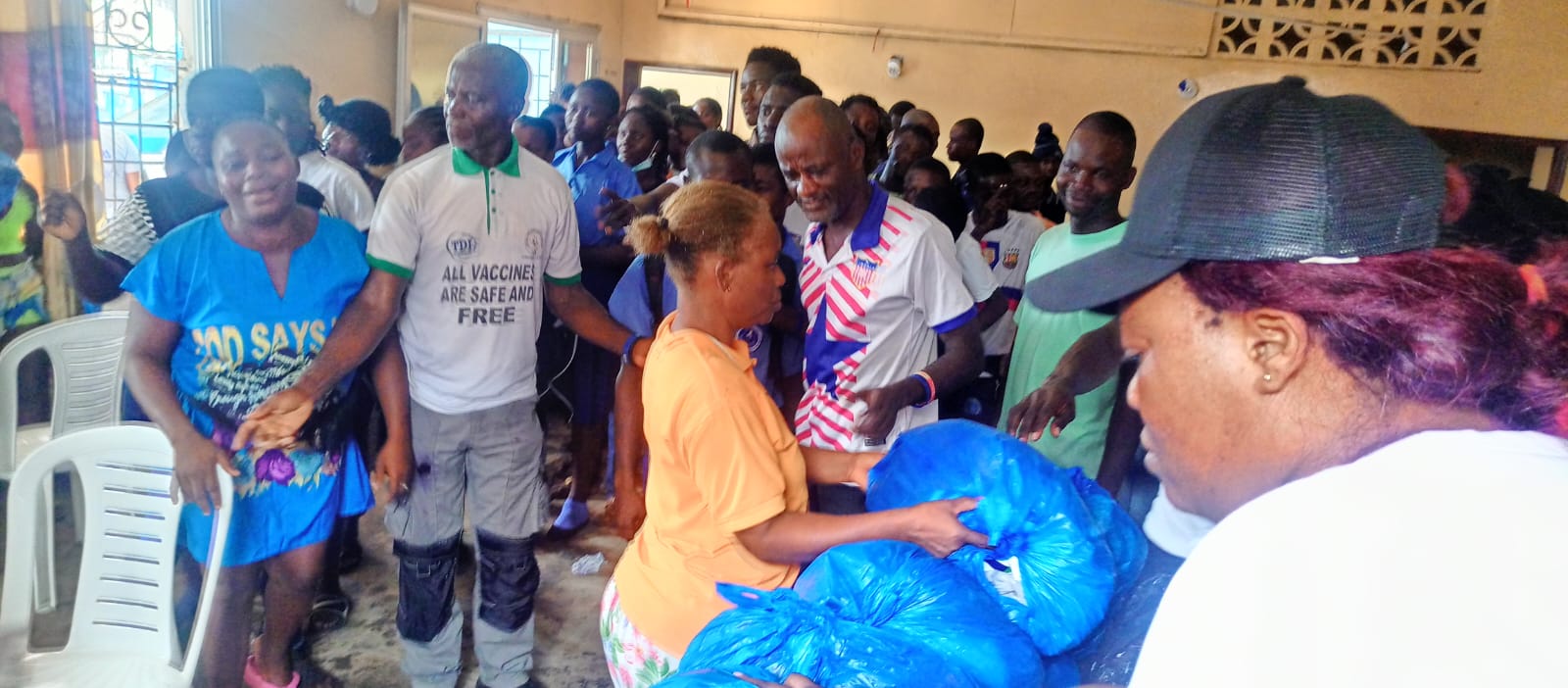
The Food Security & Water Wells Project – sustaining life through nourishment, agriculture, and clean water. An act of Feeding the Future, while Sustaining Life
Overview:
Liberia remains one of the most food-insecure nations in West Africa, with nearly half its population lacking consistent access to nutritious food. In many communities, poverty, post-war displacement, and climate-related challenges have made hunger a daily struggle.
In many Liberian communities, people still rely on unsafe rivers and shallow hand-dug wells contaminated by waste. This leads to outbreaks of waterborne diseases, high child mortality, and loss of productivity.
The Sanitary Drinking Water Project aims to build durable, community-managed wells across schools, hospitals, and rural towns, ensuring year-round access to clean water. Each well represents more than infrastructure — it’s a well of hope, health, and empowerment.
The Liberian Inclusion and Literacy Foundation (LILF), through its Global Learning Center (GLC), has launched the Food Security Project (FSP) to bridge this gap — integrating education, agriculture, and nutrition into one holistic approach that restores dignity and hope to families across the nation.
As the lack of Safe drinking water, and Food insecurity continues to threaten the health, education, and livelihoods of thousands of Liberians—especially children, women, and the elderly. The Food Security Project (FSP) seeks to restore hope and self-reliance by teaching communities how to grow, preserve, and market their own food while constructing safe drinking water.
Through the Global Learning Center (GLC), this initiative links education with agriculture, empowering schools, hospitals, and families to create sustainable sources of nourishment and income.
A two-fold development initiative that ensures every community has access to food and clean water. It supports sustainable agriculture, nutrition education, and the construction of wells for schools, hospitals, and rural areas.
Focus Areas:
Train farmers, women, and youth in sustainable agriculture and entrepreneurship. And implementations in the following areas:
- Community gardening, poultry, and fish farming.
- Nutrition and school feeding programs.
- Borehole well construction and water management training.
- Women and youth agricultural cooperatives
Expected Impact :
- Through the Global Learning Center, LILF envisions:
- An empowered and educated population capable of self-reliance.
- Thousands of trained teachers, tradespersons, artists, and farmers.
- Reduced poverty and hunger through education-driven development.
- A generation that learns to build, create, and give back.
- Sustainability and Partnerships.
- Each pillar operates under a unified sustainability model — combining education, entrepreneurship, and community participation. The GLC actively collaborates with:
- Government Ministries: Education, Agriculture, Health, and Youth & Sports
International Partners: UNESCO, UNDP, FAO, USAID, and UNICEF
Local Institutions: Schools, trade centers, and cultural associations
Together, these alliances help ensure that the Global Learning Center’s vision is deeply rooted in national development priorities and global Sustainable Development Goals (SDGs).
Motto:
“Learning for Life — Building for the Future.”
With these expanded descriptions, The Artist’s World now shines as a cultural and creative pillar, while The Tradesperson’s Portfolio stands firmly as a vocational and economic empowerment pillar—both balancing beautifully alongside The Teacher’s Aid.
Partnership Invitation
The Liberian Inclusion and Literacy Foundation (LILF) invite donors, development partners, and institutions to join hands in building a food-secure Liberia.
Together, we can grow hope, feed futures, and nurture independence—one community at a time.
Contact:
Charles D. Lamadine
Founder & CEO, Liberian Inclusion and Literacy Foundation (LILF)
Email : charleslamadine@yahoo.ca
Phone: 604 440 1685
Closing Message
The Global Learning Center (GLC) is where hope meets action — where literacy inspires livelihood and learning to builds a lasting legacy.
Through its four pillars, the GLC reflects the heart of LILF’s mission:
To empower minds, equip hands, and uplift communities — ensuring that no one is left behind.
“We are building not just classrooms, but communities of change.”
— Charles D. Lamadine, Founder & CEO, LILF
Liberia Inclusion and Literacy Foundation (LILF) Inc.
Date: November 15, 2026
Venue: Divine Kids Academy, Behind Saah Store, Johnsonville Township, Montserrado County
Total Participants: 21 (4 males, 17 females)
Introduction
On November 15, 2026, the Liberia Inclusion and Literacy Foundation (LILF) Inc. conducted a one-day capacity-building training bringing together 21 participants, including 4 males and 17 females. The training aimed to strengthen participants’ knowledge in leadership, communication, project implementation, store and warehouse management, conflict resolution, nutrition, personal hygiene, and the use of project working tools.
Opening Session
The session commenced at 10:00 AM with opening prayers led by a volunteer participant. This was followed by brief welcome remarks by Mother Oretha Sackor, who expressed appreciation to the participants for attending and emphasized the importance of building strong community systems through effective leadership and knowledge sharing.
The training was officially opened by Pastor Solomon and the CEO Charles Lamadine, who encouraged participants to take advantage of the learning opportunity and contribute actively throughout the session. All the participants and facilitators introduced themselves, sharing their names, roles, and expectations. This exercise helped foster interaction and set a participatory tone for the training. The training was conducted by Mildred B. Harris, Prince Winny Jr. Victoria M. Lackay, who co-facilitated.
Technical Sessions
Leadership & Effective Communication
This session focused on the principles of leadership, the qualities of an effective leader, and the role of communication in team coordination. Participants discussed practical scenarios related to community leadership and how effective communication can improve group performance and collaboration.
Project Implementation, Store/Warehouse Management & Conflict Resolution
Key topics included project planning, execution, reporting, and monitoring. The facilitator emphasized proper store and warehouse management practices, including documentation, stock management, and accountability measures. The session also highlighted conflict resolution techniques relevant to community work and organizational environments.

Nutrition and Personal Hygiene
This segment covered the basics of good nutrition, food groups, meal planning, and the importance of personal hygiene in preventing diseases. Participants engaged in discussions on how to promote healthier practices within their households and communities.
Review of Project Working Tools
Participants reviewed the project’s working tools, including attendance sheets, activity reporting forms, monitoring templates, and community engagement tools. The facilitator clarified how each tool should be used and emphasized the importance of timely and accurate documentation.


Closing Session
An Oreal evaluation was conducted, and the results show that the participants gained increased knowledge in every area discussed and expressed a desire for more training. They also express many thanks and appreciation to the LILF and the facilitators. The training concluded with closing remarks and prayers led by Pastor Solomon. He thanked the facilitators and participants for their engagement and encouraged them to apply the knowledge gained in their respective communities. A group photo session followed, marking the end of the training.
Conclusion
The one-day training was successfully conducted, with active participation from all attendees. Participants gained practical knowledge and skills in leadership, communication, project implementation, health and hygiene, and the use of project tools. The Liberia Inclusion and Literacy Foundation (LILF) Inc. acknowledges the valuable contributions of facilitators and participants and looks forward to continued collaboration in strengthening community capacity.